HOLE#
PAR
YDG
DISTANCEDD
ACCURACYDA
DRIVER %D %
FAVOURS BOMBERS?FAVOURS DA?
FAVOURS ACCURACY?FAVOURS DD?
MEDIAN
DISTRIBUTIONAPP DISTRIBUTION
In summary...
Players who tee off on the odd holes (the Odds) will likely be hitting driver on every par 4/5 (7 times).
Players teeing off on the even holes (the Evens) will also be hitting 7 par 4/5 tee shots, but probably less than
driver on hole 2 and potentially on 6. Overall,
the tee shots on the Evens favour distance less than tee shots on the Odds.
All else equal, the longer player should tee off on 1.
There are two par 3s on the odd holes and two on the even holes.
The median approach distance for both the Even and Odd player are roughly the same (165-170 yards).
However, the Even player's approaches will be concentrated around 150-210 yards
(holes 5, 7, 8, 9, 11, 15) while the Odd player will face a more balanced distribution of approach shots, with critical 200+ shots expected on 3, 4, 12, and 17 and short irons on 2, 6, 13, and 18.
Foursomes pairings are optimized as follows:
- For each hole, estimate the expected number of shot to be hit from various bins (approach: 200+, 150-200, 100-150, 50-100; around-the-green: fairway, rough, bunker; putt: 2-5ft, 5-30ft, 30ft+).
These shot counts vary by player skill—e.g. longer players are expected to have shorter approach shots.
-
Estimate the value of distance/accuracy skill for each tee shot—e.g. distance is worth more on a reachable par 5.
-
Combine this information, along with player skills for each bin, to determine the expected score for every possible pair of players in the alternate shot format.
Other notes:
-
A team's "compatibility boost" is defined as the difference between their expected score in the alternate shot
format and their average expected score if they were playing their own balls. It is possible for a team to
have negative (or positive) compatibility for both Odd/Even configurations, but most teams will have
one positive and one negative.
-
The optimal lineup is the set of four pairings—out of all possible 4-pairing combinations—with the lowest
cumulative expected score.
Key takeaways...
-
Bethpage Black is a pretty balanced course on its odd and even holes, which makes the returns to optimizing foursomes pairings smaller than at other courses.
-
There are still some differences between the Odds and Evens: tee shots on the odd holes reward distance more, the Odd player hits more long irons and wedges while the Even hits more mid irons,
and the Even player hits more around-the-green shots.
-
Some combinations of players will work well together even if the odd and even holes were identical—e.g. a bomber paired with a good wedge player—but that is not always the case.
An excellent long-iron player and a good putter will only be complementary if differences between the Odds and Evens allow them to be.
-
The most important determinant of who makes the optimal lineup is a player's overall skill at Bethpage Black.
Our model's top 8 players by overall skill on both the American and European sides made it
into the optimal lineups.
-
The difference between our optimal lineup and the next-best lineups are very small, on the order
of hundredths of strokes.
Team USA

Pairing #1
accurate; good iron player
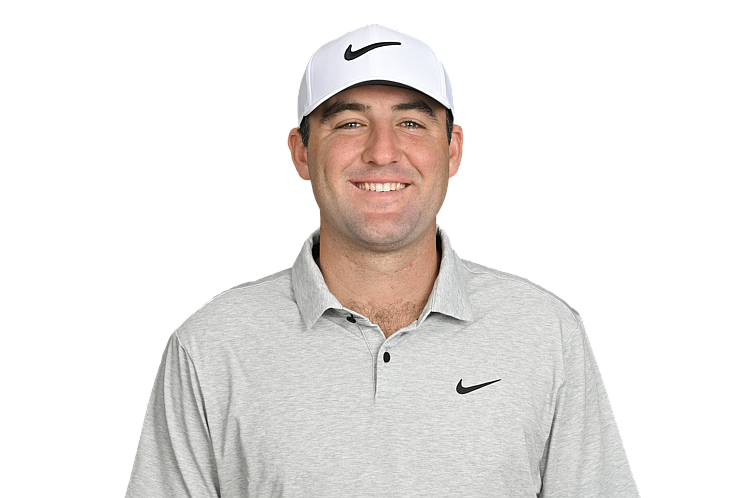
Scheffler is the best long iron player in the world and also pretty long off the tee,
so he should be on the Odds based on the table in the course insights tab.
Because the odd tee shots favour distance more, it doesn't make sense to pair a bomber with Scottie
as they would be forced to tee off the Evens.
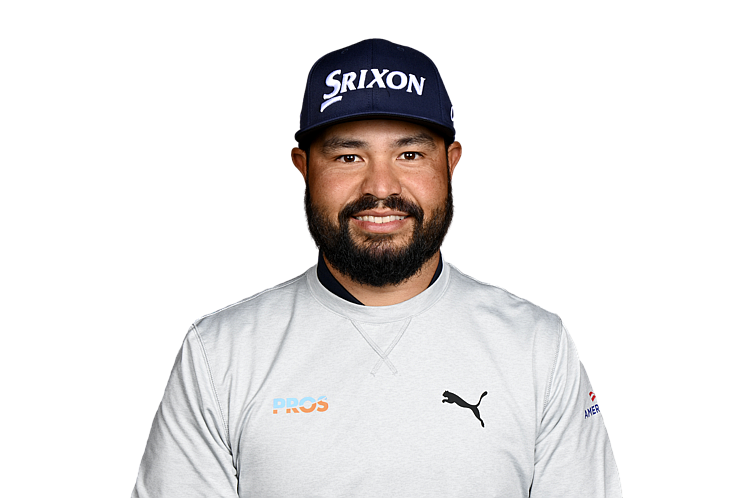
Sam Burns, who has a similar overall skill to J.J. Spaun but hits it further,
was also a candidate to be paired with Scheffler.
But some of Burns skill is taken away if he is forced to tee off the Evens,
which is why our model gave the (very) slight edge to J.J. as the world #1's alternate-shot partner.
Pairing #2
elite driver; good iron player and putter
short but accurate; great iron player and putter
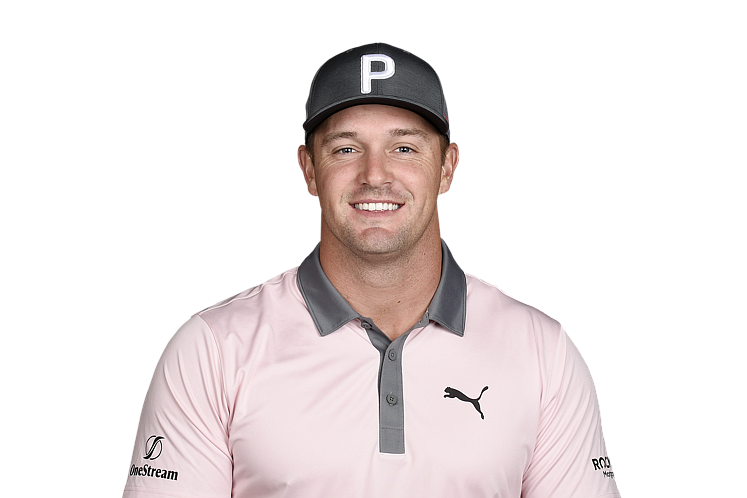
DeChambeau and Henley are the most compatible of any potential team (+0.15).
This is driven mainly by off-the-tee compatibility:
Bryson can hit 7 drivers on the Odds, many of which reward driving distance heavily.
Henley is a high-skill player but hits it very short; it helps to take the more bomber-friendly
tee shots out of his hands and into Bryson's.
This partnership also gives more wedge opportunities to Henley,
who is in the 95th percentile or better from 50 to 150 yards.
Pairing #3
long but inaccurate; good iron player
great putter; good iron player
Xander and Griffin are solidly inside our top 8 in terms of overall skill, so they were always going to end up
somewhere in the optimal lineup.
They aren’t especially complementary, but Xander is long, so he should be on the Odds.
This pairing is a good reminder that simply sending out the best golfers is more important
than obsessing over matching playing styles.
Pairing #4
long but inaccurate; great putter
great iron player; good putter
The logic behind the Young and Cantlay partnership is similar to the pairing above. They are both in the top 8
players by overall skill and Young is long, so he will tee off the Odds.
Cantlay is very good with his mid irons which is a plus on the Evens, but Young's long iron
game is a relative weakness which is a negative for a player on the Odds.
All Team USA Foursomes Pairings
RANK
PLAYER 1 (ODDS)
PLAYER 2 (EVENS)
AVERAGE SKILLAVG
COMPATABILITYCOMPAT
OVERALL SKILLOVERALL
Team Europe

Pairing #1
long but inaccurate; great iron player and putter
accurate; great iron player and putter
McIlroy is very compatible with a lot of players because the Odds suit him well at Bethpage: the tee shots reward his distance more than the Evens,
and he’ll hit more long irons (his relative strength).
Fleetwood is not a bomber and is solid across the board with his irons,
so it’s fine to put him on the Evens.
Lowry is actually the most compatible with Rory (+0.14) but his overall skill is too low to make it into the optimal lineup.
Pairing #2
It's a similar story for Rahm and Hatton: Rahm can play to his strengths by teeing off the Odds and
Hatton can hide his weakness a bit (which is his driving—he's not long or very accurate at the moment).
#Legion13
Pairing #3
great short game; average ball-striker
These last 4 players (who make up pairings #3 and #4) are in the clear
top 7 for Europe, so it's hard for any of them to be bumped out of the optimal lineup.
This particular pairing of MacIntyre and Aberg has good complementarity off-the-tee with Aberg’s length, but
are very similar from every distance bin and therefore don't have any complementarities on approach.
Pairing #4
great mid-to-long iron player; good putter
average driver; good iron player and putter
Hovland and Fitzpatrick are the least compatible of any of the optimal foursomes teams,
but as said above they are too good to be excluded.
They are the most compatible of any pairing around-the-green: Fitzpatrick, who has team Europe's best short game,
is expected to hit more ARG shots on the Evens.
However, this is offset by the fact that the Odd player hits slightly fewer mid irons (Hovland’s relative strength)
and more long irons (Fitzpatrick's relative strength).
These offsetting issues are reversed when you put Fitzpatrick on the Odds and Hovland
on the Evens.
All Team Europe Foursomes Pairings
RANK
PLAYER 1 (ODDS)
PLAYER 2 (EVENS)
AVERAGE SKILLAVG
COMPATABILITYCOMPAT
OVERALL SKILLOVERALL
Four-ball (
better ball) pairings are optimized by simulating hole scores to estimate the expected better-ball score for every possible pairing.
These simulations take into account two primary factors beyond player skill:
-
Each player’s expected “within-round” variance: players who make lots of birdies/bogies have high within-round variance,
while players who make lots of pars have low within-round variance.
Conditional on skill, having more variance is beneficial in the four-ball format.
-
Hole-level fit: based on a player’s skillset, they will be better-suited to certain holes at Bethpage Black.
In the four-ball sims, having a negative correlation between teammates’ hole-level fit is beneficial (i.e. P1 plays the par 5s well, P2 plays the par 3s well).
This is commonly referred to as "ham-and-egging".
Other notes:
-
A team's four-ball skill is their expected score relative to a team of two 0 SG players in the better-ball format.
- A team's compatibility boost is defined as the difference between their expected better-ball score
with hole-level fit accounted for and without. This boost will be larger
for teammates with different skill sets who excel on different holes.
- The optimal lineup is the set of four pairings—out of all possible 4-pairing combinations—with the lowest
cumulative expected score.
Key takeaways...
- The team complementarity effects are small.
In the simulations, the largest complementarity is between Henley/DeChambeau at 0.07 strokes per round.
The intuition is that it doesn't really matter if teammates are “good” on the same holes; this just means
their expected score on those holes will go down, and on the other holes it will go up
by roughly an offsetting amount.
- Ham-and-egging matters when looking at how an actual round plays out,
but it's not something you can manufacture through pairings unless the hole-level fit adjustments
are unrealistically large (e.g. P1 birdies every par 5 and bogies every par 3; P2 does the opposite).
- All else equal, high-skill players should be paired with low-skill players.
This effect is also very small: English (skill of +1.16) and Scheffler (+3.22)
are expected to be 0.06 strokes better than a team of two players with skills of +2.19 (the average of 1.16 and 3.22).
- Players’ within-round variance (4-ball fit)—which measures how volatile a player's hole scores
in a round typically are—has a meaningful impact on a team's expected four-ball score.
Bombers tend to be high-variance, making them a good fit for this format.
- Overall skill at Bethpage Black is still the most important variable when selecting a lineup,
but one player in the top 8 by skill on each side—Henley for the Americans, MacIntyre for the Europeans—missed out on the optimal lineups.
- As with foursomes, there are many different variations of these optimal lineups (e.g. swapping Cantlay and Spaun) that provide essentially
the same cumulative expected score.
Team USA
Pairing #1
great iron player; good putter
As with course fit, four-ball fit is relative to a player's own baseline: Scheffler is a
worse better-ball player than a hypothetical player with the same (absurdly high) skill level but higher
variance.
But, since Scheffler's skill level is so high, there is no fit adjustment or team complementarities
that could knock him out of the optimal lineup.
Cantlay is also not a great four-ball fit, but his overall skill is high enough that he makes the optimals.
These two are not particlarly complementary in their playing styles, but they are forced together by
the composition of the rest of the optimal lineup.
Pairing #2
elite driver; good iron player and putter
great putter; good iron player
Griffin and DeChambeau are the most complementary team in the optimal lineup, and are
behind only Henley-DeChambeau when considering all possible pairings.
Their skillsets should give them different opportunities to make birdies, although
as mentioned above these effects are marginal. As expected given his prodigious length off the tee,
Bryson's game is a great fit for four-ball.
Pairing #3
accurate; good iron player
long but inaccurate; great putter
Spaun and Young narrowly beat out the Henley-Young pairing for a spot in the optimal lineup.
Henley's hole fit is more complementary to Young’s than Spaun's, however
Henley’s steadiness makes him the worst four-ball fit of anyone competing this week.
Pairing #4
elite putter; average ball-striker
long but inaccurate; good iron player
Burns gets into the optimal four-ball lineup despite not being among the top 8 Americans by overall skill
due to his good 4-ball fit. Given his length and relative inaccuracy, we would expect Schauffele to be a high-variance
player, but he's actually well below average. In the 5 seasons prior to 2025 Xander was above average in driving
accuracy, so this year is likely an anomaly in that department.
All Team USA Four-ball Pairings
RANK
PLAYER 1 (4-BALL FIT)
PLAYER 2 (4-BALL FIT)
TEAM 4-BALL SKILLTEAM 4-BALL
COMPATABILITYCOMPAT
OVERALL SKILLOVERALL
Team Europe
Pairing #1
long but inaccurate; great iron player and putter
average driver; good iron player and putter
Both McIlroy and Fitzpatrick are good 4-ball fits, and they have above-average compatibility. Overall the European team
is composed of higher-variance players than the Americans and therefore better suited to four-ball.
Pairing #2
Rahm, somewhat surprisingly given his length, is below average in within-round variance.
The final spot in this optimal lineup was
between MacIntyre and Hatton.
MacIntyre’s skill at Bethpage is about 0.2 strokes better than Hatton’s, but Hatton is a better four-ball fit.
Hatton-Rahm is also the second-most compatible European team behind only McIlroy-Fleetwood, which gave them
the slight edge over MacIntyre-Rahm.
The difference in expected score between the Hatton-Rahm pairing and the MacInytre-Rahm pairing is only 0.03 strokes,
which is well within any margin of error that would be associated with this analysis.
Pairing #3
great mid-to-long iron player; good putter
Hovland has the highest within-round variance of any player this week
after accounting for a player's distance and accuracy skill
(bombers tend to be higher variance, accurate players lower), making him a great fit for better ball.
Hovland and Ludvig have moderate complementarity in their hole-level advantages.
Pairing #4
accurate; great iron player and putter
bomber; poor around green
Fleetwood’s consistency makes him a “bad” 4-ball fit, but his overall skill puts him safely in the optimal lineup.
Hojgaard's within-round volatilty makes him a great fit for 4-ball, which is why he is getting the nod
despite being outside the top 8 in overall skill at Bethpage.
These two are also the 4th-most complementary European pairing.
All Team Europe Four-ball Pairings
RANK
PLAYER 1 (4-BALL FIT)
PLAYER 2 (4-BALL FIT)
TEAM 4-BALL SKILLTEAM 4-BALL
COMPATABILITYCOMPAT
OVERALL SKILLOVERALL